viernes, 5 de abril de 2013

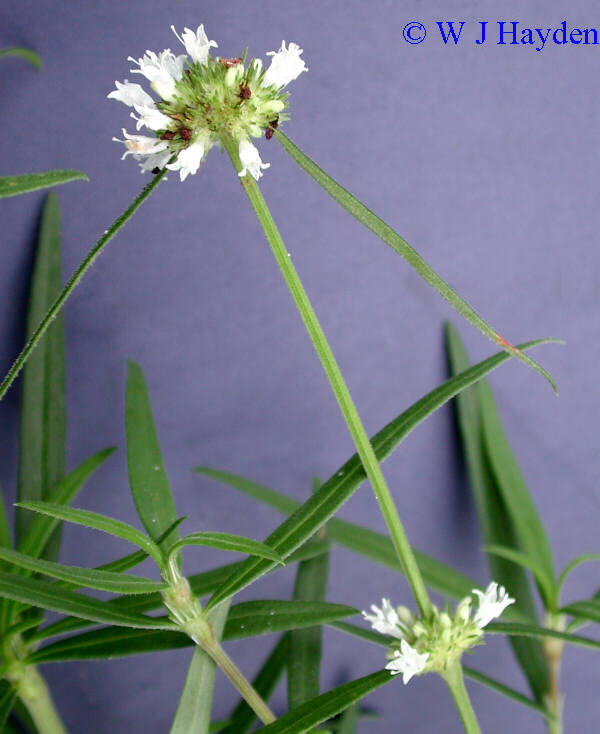
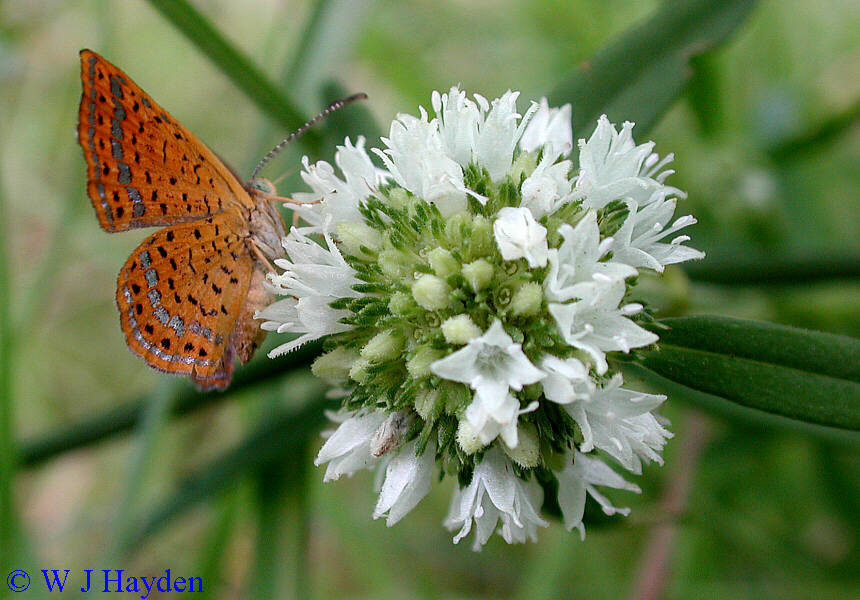
Spermacoce verticillata -Botón blanco


http://chalk.richmond.edu/flora-kaxil-kiuic/s/spermacoce_verticillata.html
family Rubiaceae
Spermacoce verticillata L. [syn: Borreria verticillata (L.) G. Meyer]
Weedy herb; leaves opposite, simple, linear, with bristle-like interpetiolar stipules; flowers mostly in a terminal or subterminal clusters; corollas tubular, white; ovary inferior.
Additional images:


http://www.fs.fed.us/global/iitf/pdf/shrubs/Spermacoce%20verticillata.pdf

Benefits.—Botón blanco is a forage plant, but not one highly favored by livestock. African material
was found to contain 0.2 percent alkaloid including borreine and borreverine (Burkill 2000).
At least part of the alkaloids are beta-carbolines and would represent a poisoning hazard if they were present in higher concentrations (Animal Science at Cornell University 2002). Botón blanco has a number of uses in herbal medicine, most frequently for skin conditions. In Africa, leaf extracts are used to treat leprous conditions, furuncles, ulcers, and gonorrheal sores (Burkill 2000, Environnement et Développement du Tiersmonde 2002). A lotion is prepared to relieve skin itches (Liogier 1990). Other preparations are used internally to treat diarrhea, as a diuretic in the treatment of schistosomiasis, and as an abortive.
An essential oil extracted from the leaves has been shown to inhibit Escherichia coli and Staphylococcus aureus (Burkill 2000).

viernes, 29 de marzo de 2013

How To Plant Potatoes for High Yields

I share how I plant Irish or red potatoes and how to fertilize them for the highest yield. I have tried other ways without success. I expect to get about 80 lbs of potatoes from 4 lbs of seed potatoes that cost me $3.40.
RESOURCES:
- The Mittleider Gardening Course: 
http://growfood.com/Mittleider-Garden...
- Natural Mineral Fertilizers:  
http://facebook.com/groups/Mittleider...
- Garden Planting Details Sheet: 

Mittleider Gardening Method

http://healthyhomesteading.com/2011/05/the-mittleider-method-of-garden/ 
Mittleider Method Techniques That Changed The Way I Garden
  1. Feeding Plants- Dr. Mittleider found for plants to thrive they need 16 essential plant nutrients. By providing plants with the 16 nutrients plants are healthier and full of nutrients we can consume.
    The 16 nutrients include 3 airborne elements -Carbon, Hydrogen and Oxygen.
    The other 13 include nitrogen, phosphorus, potassium (NPK).
    The other ten include calcium, magnesium, sulfur and 7 trace elements.
    This plant formula is fed in small amounts to the plants on a weekly basis over a period of the growth of the plants.
  2. The Soil -The condition of the soil is not as vital when using the Mittleider Method. It is important to have well draining amended soil but you can still plant successfully in many different soil types. According to Dr. Mittleider and his method, plants can grow in virtually any soil as long as the plants are given the essential nutrients. It is however important to create soil beds or grow boxes that have the soil evenly distributed for proper water distribution.
  3. Plant Spacing – With the Mittleider Method seeds and seedlings can be spaced a lot closer together than traditional methods recommend. The reason for this is because many plants can be grown vertically. Tomatoes (indeterminate), cucumbers, melons and squash some of the plants that can be grown inches apart because of vertically growing.
  4. Watering – One of the mistakes I have been making with my garden over the past few years is the methods I use for watering. I usually use drip systems and/or a osculating sprinkler. Dr. Mittleider did not recommend these type of watering because it is wasteful and not as affective.  Watering with a PVC pipe with small holes drilled into them and place down the center of wide isles is the best way to water, according to Dr. Mittlleider.
  5. Pruning - Apparently there are many vegetable plants that can be pruned. I was familiar with pruning tomatoes but didn’t realize cucumber, squash and melon plants as well. Pruning these plants can be done because of the vertical growing method. Pruning is important because is allows the growth of large fruit instead of many small fruits. And because plant spacing is closer you can still get the same size harvest but with larger fruit.
Is the Mittleider Method of Gardening Organic?
Growing an organic garden is very important to me. If I am going to take the time to garden to feed my family, I want the produce to be most nutritious it can be. After researching the Mittleider Method and finding out that in order for plants to grow they need certain nutrients. I came to the realization that in order for my family to get the best possible food from my garden, my plants need to be as healthy as possible.
Many people, including myself see the plant formula and think, “those ingredients are in commercial non-organic fertilizers, they can’t be organic, can they?” Well, yes they can. If we understand the fact that everything is chemical at a molecular level. The “chemicals” or elements that are in the plant formula are in our soil and manure fertilizers already.
The reason elements such as nitrogen, phosphorus and potassium (aka NPK, found in bags of fertilizers, usually with numbers like 10-10-10) are in commercial fertilizers is because they do feed plants. There is however a problem with commercial fertilizers and that is the misuse of them. For instance, one of the things nitrogen does is causes rapid growth. An unbalanced amount of nitrogen will cause rapid growth but not healthy nutritious plants. Overuse of certain elements can cause toxicity in the soil as well.
So why won’t organic fertilizers such as manure be good enough? The problem with manure is that the nutrients plants need are not always in manure. They may have some of the nutrients but not in the right amounts. Manure often has a unhealthy amount of salt in it which can affect the proper growth of plants. If manure is not sterile it can also cause all kinds of weed problems for you. You can still use sterile manure in your garden but instead of thinking of manure as a fertilizer think of it as a soil amender. The Mittleider Method of gardening offers plant nutrients in the right amounts over the right amount of time. The soil does not get to any toxic level because they plants are using what they need when they need it.
There

martes, 26 de febrero de 2013

Nerium oleander -Adelfa

Commons-emblem-notice.svg
 
Adelfa, Baladre
Nerium oleander flowers leaves.jpg
Nerium oleander
Estado de conservación
Preocupación menor (LC)
Preocupación menor (UICN)
Clasificación científica
Reino: Plantae
Subreino: Tracheobionta
División: Magnoliophyta
Clase: Magnoliopsida
Subclase: Asteridae
Orden: Gentianales
Familia: Apocynaceae
Subfamilia: Apocynoideae
Tribu: Wrightieae
Género: Nerium
Especie: N. oleander
Nombre binomial
Nerium oleander
L., Sp.Pl., vol.1, p. 209, 1753[1]
Sinonimia
Fruto abierto con semillas.
La adelfa (Nerium oleander), también conocida como laurel de flor, rosa laurel, baladre o trinitaria - entre otros, es la única especie perteneciente al género Nerium incluido en la familia Apocynaceae. Planta arbustiva - que puede llegar a árbol de porte pequeño - de hojas perennes lanceoladas de un verde intenso y flores de color rosa (en la variedad silvestre). Las hojas, flores, tallos, ramas y semillas son venenosas.

Índice

Etimología

Adelfa deriva del griego Dafne, el Laurel, a través del árabe تفلة, al-defla.
El nombre científico deriva del griego Nerion, origen del latín Nerium asociados a Nereo, dios del Mar y padre de las Nereidas.
Oleander del latín Olea, ‘olivo’, por la semejanza de sus hojas y de dendron árbol.

lunes, 17 de diciembre de 2012

Honor The Giants

http://youtu.be/vycnMZ2uf3w

Vintage pictures from the Land of the Giants. Oregon, Washington and California. These pictures represent those that we will not see again, the Old Growth Timber.

genus Dalbergia

es.wikipedia.org/wiki/Dalbergia_retusa
misartefactos.blogspot.com/2012/12/cocobolo
en.wikipedia.org/wiki/Dalbergia

Commons-emblem-notice.svg
 
Dalbergia
Dalbergia sissoo Bra24.png
Siso (Dalbergia sissoo), madera rosa de la India
Clasificación científica
Reino: Plantae
División: Fanerógama Magnoliophyta
Clase: Dicotiledónea Magnoliopsida
Subclase: Rosidae
Orden: Fabales
Familia: Fabaceae
Subfamilia: Faboideae
Tribu: Dalbergieae
Género: Dalbergia
L.f. 1782
Especies
Ver texto.
Dalbergia es un gran género de pequeños a medianos árboles, arbustos y lianas de la familia de leguminosas, Fabaceae, subfamilia Faboideae.
Tiene amplia distribución, nativa de regiones tropicales de América Central y de Sudamérica, África, Madagascar y sur de Asia. La cantidad de especies del género está disputada, con diferentes autoridades citando entre 100 a 600 spp.; ILDIS acepta 159 spp.
Especies selectas de importancia económica

Usos

Muchas especies de Dalbergia son importantes árboles maderables, valuadas por su decorativa figura y la fragancia de su madera, rica en aceites aromáticos. La más famosa de ellas es la Dalbergia nigra madera rosa, así llamada debido a su aroma, y muchas otras especies tienen semejante característica.
D. nigra Río, Bahía, madera rosa brasileña, Palisander de Río Grande, o Jacarandá; excesivamente explotada en el pasado, está ahora citada por el CITES. La 2ª más deseada madera rosa en occidente es Dalbergia latifolia conocida en Oriente como "madera rosa india" o Sonokeling. La mayoría de las especies de madera rosa tienen un color amarronado. Y notar que solo pocas especies de Dalbergia dan madera rosa.
La brasileña "tuli" Dalbergia decipularis es color cremosa con líneas rojas o salmón. No confundir con "tuli" Liriodendron tulipifera, usada en cajones descartables.
Otra similarmente usada (pero púrpura con tiras negras), y también de Brasil, es la Dalbergia cearensis, todas son pequeños árboles de no más de 10 m. Otro notable productor de madera es el Cocobolo, Dalbergia retusa, de América Central, con un espectacular anaranjado decorativo. [1]
El granadillo negro (Dalbergia melanoxylon) tiene una madera intensamente negra muy demandada para construir instrumentos musicales de viento.
Las especies de Dalbergia son alimento de larvas de algunas especies de Lepidoptera incluyendo a Bucculatrix mendax que solo come Dalbergia sissoo.
Las especies de Dalbergia son notorias por causar reacciones alérgicas debido a la presencia de quinonas sensibilizantes en la madera.

Enlaces externos

================================
Dalbergia is a large genus of small to medium-size trees, shrubs and lianas in the pea family, Fabaceae, subfamily Faboideae. The genus has a wide distribution, native to the tropical regions of Central and South America, Africa, Madagascar and southern Asia. The size of the genus is disputed, with different authorities citing between 100–600 species; ILDIS accepts 159 species.

Selected species (Rosewood)

viernes, 7 de diciembre de 2012

Horticultural Myths

Looking for the newest myth-information? Check out our blog The Garden Professors. You'll find science-based information from four horticultural professors from around the country. 
Fertilizers
Phosphate
How plants work
Maintaining trees and shrubs
Mulches
Wood chips
Pesticides
Compost tea
Part 1Part 2 
Part 3 (EPA statement about pesticidal use of compost tea) 
Part 4 (Literature)
Planting techiques
Scientific literacy
Soil amendments
Organic matter
Polyacrylamide gels
A recently transplanted tree that failed due to following a horticultural myth. The native soil was removed and replaced with organic matter, leading to drought and other stresses that killed the tree (L. Chalker-Scott).